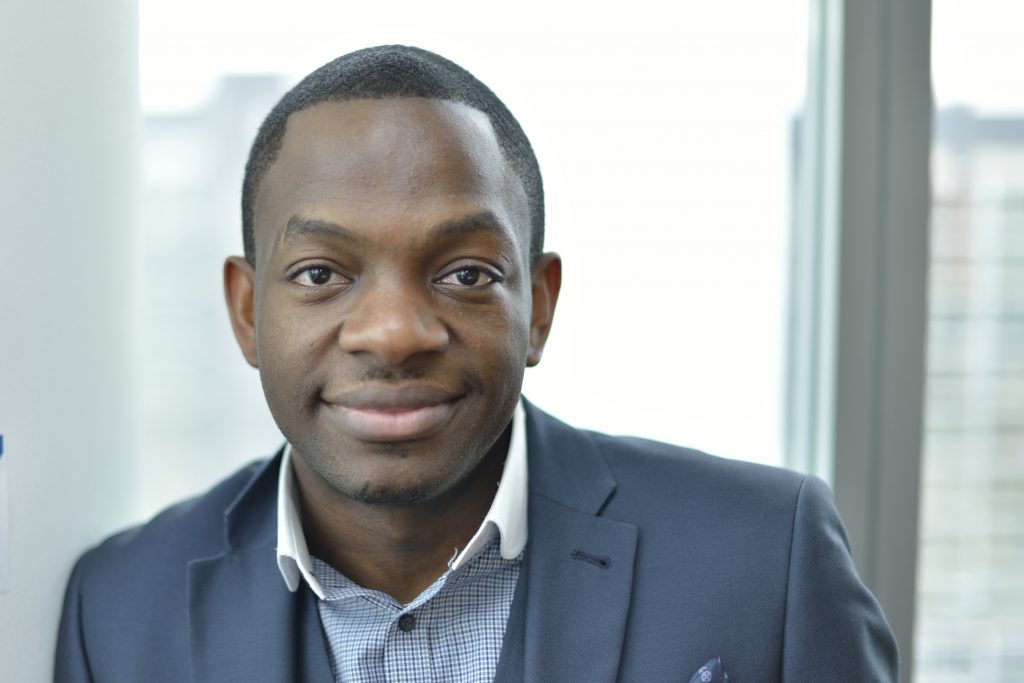
Michael Lennard, Chief of International Tax Cooperation and Trade in the Financing for Sustainable Development Office (FSDO) of the United Nations, discusses, from a personal perspective, a range of key issues on the UN’s approach to transfer pricing.
In 2019 the United Nations Tax Committee issued draft guidance on financial transactions. It was finalized in 2020 and will be a Chapter in the forthcoming 3rd Editon of the UN Transfer Pricing Manual. In it, the UN’s draft note provides procedures for arriving at an arm’s length remuneration for loans and guarantees, taking into account external and internal funding options. The UN’s approach does not set out to take a different approach to, say, the OECD. Equally, there’s no point in duplicating work, particularly when resources are stretched. However, there is a place for second opinions that can offer insights based on particular expertise and focus, and the Committee has chosen examples particularly relevant to developing countries.
A focus on developing countries
As far as the UN’s expertise and work are concerned, while we consider the needs of developed countries, we have a particular focus that takes into account the interests of developing countries. So when we started doing capacity building on transfer pricing, one area of feedback was to look more closely at the whole area of loans and guarantees and, in particular, the difficulties developing countries have in working out arm’s length pricing.
Growing awareness shown by financial services
Our FS clients are more aware of the nuances between the OECD and UN positions and do work on understanding and complying with the requirements of developing countries. Not only from a risk perspective but also from a corporate responsibility viewpoint, which is at least equally important to our clients.
Erik Stroeve, Mazars Financial Services Tax Leader
Test views
So it’s about developing guidance to help understand transfer pricing issues more thoroughly, as well as helping to identify good and bad practice. When several associations work on the same issue, it’s sometimes a case of what looks like a major difference often isn’t. But there’s definitely value in giving members of a Committee the freedom to point out areas of improvement where needed, as this helps paint a more comprehensive picture and a greater understanding of the issues for all parties concerned. Better UN guidance improves OECD and other guidance.
One of the areas we are keen to promote is phraseology used in tax law. It’s important that we phrase taxation rules in a way that the majority of people, not just a few, can understand most of the time. For tax professionals in the developed world who regularly work on transfer pricing issues, they often have a level of expertise and understanding way above those in the developing world who are just as capable, but perhaps just beginning to get to grips with complex tax issues such as transfer pricing, and lacking the same resources and information. It’s important, therefore, that we bear this in mind when developing tax regulation.
Familiar processes
Other considerations would be how changes in tax rules impact treaties, or in locations where the tax regime is good, but administration is slow. So we aim to raise issues that resonate with developing countries into discussions during the capacity building phase. Where possible, we try and put forward proposals that developing nations are more comfortable with, which is why we favoured the comparable uncontrolled price (CUP) method for transfer pricing. Ultimately, it’s often better to stick with a general rule that can be applied 99% of the time. If you start listing all the exceptions, you can begin to dilute the importance of the general rule.
A double-edged sword
In terms of gathering views and bringing more developing countries to the discussion table, the use of technology has been advantageous. As we have seen with COVID-19, the increase in virtual meetings can help developing country members to participate in important discussions without travelling, which previously could have been seen as prohibitive. More, younger and more diverse gender participation is possible. But it can be a double-edged sword. For example, there may be language and cultural barriers that are harder to navigate via video. There are also timezone and bandwidth challenges to contend with. And it is harder to build relations of trust and cooperation.
If we strive to be inclusive and understand tax-related issues from a wider range of viewpoints, then we can perhaps begin to develop a global tax system that is fair from everyone’s perspective. It is more likely to survive and benefit taxpayers and tax administrations both if it is built on the rock of “felt” consensus than the sand of superficial but unsupported agreement.
The regulatory requirements for insurance companies are becoming increasingly complex. In this interview, Marc Böhlhoff and Thomas Volkmer, Partners at Mazars in Germany, discuss the impact of this change on the industry and delve into what it means for the operations of auditing and consulting firms. Mr. Volkmer, the insurance industry is undergoing rapid change. What […]
The rapid collapse of one of Switzerland’s most emblematic banks, following the demise of tech lenders on America’s west coast, has raised concern over banking stability. What are the consequences for the sector, the economy and for society? Gregory Marchat, Global Head of FS Advisory, and Emmanuel Dooseman, Global Head of Banking and Capital Markets, […]
In an interview, Korbinian Ibel, Director General at the European Central Bank (ECB), shares insight on how bank-specific direct supervision works, what the current risks and challenges are, and priorities to look out for in the coming years. What does the Banking Supervision arm of the European Central Bank do? Find out about its policies, […]
On 19 January 2022, Mr Patrick Amis, the head of ECB Directorate General Specialised Institutions and Less Significant Institutions (DG/SPL) had a formal meeting with Mazars to discuss the implications of the pandemic for the LSIs and the supervisory focus. The main risks outlined by Mr Amis, were in the areas of NPLs, digitalisation, IRRBB, […]
Michael Lennard, Chief of International Tax Cooperation and Trade in the Financing for Sustainable Development Office (FfDO) of the United Nations, examines the role of tax toolkits for developing countries from a personal perspective. The Platform for Collaboration on Tax (PCT) involving the UN, OECD, IMF and the World Bank, is certainly a good example […]
In a series of articles aimed at promoting debate on the evolution of international tax regimes, Michael Lennard, Chief of International Tax Cooperation and Trade in the Financing for Sustainable Development Office (FSDO) of the United Nations, discusses the tax-related challenges governments, professionals and practitioners face. Following on from the first article on this topic, […]
In a series of articles aimed at promoting debate on the evolution of international tax regimes, Michael Lennard, Chief of International Tax Cooperation and Trade in the Financing for Development Office (FfDO) of the United Nations, discusses the tax-related challenges governments, professionals and practitioners face. In the first of this two-part article, Mr Lennard expresses […]
Financial reporting is witnessing a period of evolution as the needs of users become more complex. Javier de Frutos, Chairman of the Commission on Financial Reporting of the European Federation of Financial Analysts’ Societies (EFFAS) and CIO at the investment firm Sailbridge Capital in New York talks to Mazars about his thoughts on the direction […]
Nadia Filali is director of blockchain programmes and founder of LaBChain at the French public group Caisse des Dépôts et Consignations. Here Mazars partner Jean Latorzeff and senior managers Emilie Legroux and Christophe Bonnefoy talk to Nadia about the pioneering role Caisse des Dépôts is taking in the development of blockchain technology. Why and how […]
As chief risk officer and executive committee member of Atlas Insurance PCC, Ian-Edward Stafrace is passionate about effective enterprise risk management and seeking opportunity from risk. Here Alan Craig and Enrico Federici of Mazars in Malta, talk to him about technological, regulatory and business model changes and how protected cells are enabling innovation. What do […]
Since 2010, Gérald Harlin has been Group Chief Financial Officer and a member of the Group’s Executive Committee since July 2008. As of July 1st, 2016, he joined the Group’s Management Committee.Here he talks about AXA’s response to challenges facing the insurance sector. What will be the most important issues for the insurance sector in […]
Foncière des Régions (FDR) is one of the largest European property companies, with assets worth more than 19 billion euros. The company is mainly active in the office, hotel and residential markets in a number of European countries including France, Germany, Italy and Spain. Here we talk to Olivier about what’s driving the group’s recent […]
Arkéa Banking Services began life in 2009 by offering white label banking services on behalf of third parties. CEO, Christophe Bitner tells Mazars why offering support to Fintechs is now an important next step. What’s the driving force behind the evolution of Arkéa Banking Services and what are the levers for growth? Christope Bitner: when the […]
The unique business transformation attached to the digital era requires companies to respond with velocity. New systems integrating core transactional assets with mobile and social media have to be used – implying their ability to face volume. Moreover those new systems need to manage enriched operational reality and risks. Laurence Malroux, CEO and President of […]
The arrival of technology has been a game changer for Ireland’s banking industry. Niall O’Grady Commercial Director of permanent tsb (PTSB) talks to Liam McKenna Partner Consulting Services – Mazars Ireland, about how the bank is using digitalisation to create more meaningful relationships with customers. Liam McKenna: Where does technology fit into PTSB’s proposition – as an […]
Customers trust their banks with an increasing amount of data that paints a picture not just about their financial situation and preferences, but about their lifestyles. Bank of Ireland’s Garvan Callan, Director, Customer, Digital & Innovation talks to Liam McKenna Partner, Consulting Services – Mazars Ireland, about how ethics and good principles are essential in shaping […]
Compte Nickel is a current account service accessible to all. Operated by the Financial Supervisory Committee of electronic payments (EPF), this new payment account which has been launched recently in France can be opened in 5 minutes at a newsagent/tobacconist by anyone regardless of income requirement. Ryad BOULANOUAR, President of the the French Financial Supervisory […]
Digitalization poses many challenges for AXA Assistance as well as bringing great opportunities. Alexis de Schonen, Digital Transformation and Strategy Director, and Roman Puszka, Chief Compliance Officer and Data Privacy Officer, discuss this issue. Does digitalization play a central role at AXA Assistance? And if so, which one? Alexis de Schonen : Digitalization is the […]
3 Questions to Mister Doe When it comes to the administration of dormant bank accounts and unclaimed life policies, the quality of data, the inflexibility of internal procedures and complex processing is causing banks and insurers big problems. Vladimir Nguekam, CEO of digital analytical firm Mister Doe talks to Mazars about how taking a digital approach […]
One of the key takeaways of integrated reporting is that non-financial information ultimately has an impact on a company’s value. It’s for this reason that insurance giant Generali – an international Group based in Italy – prefers to use the term pre-financial rather than non-financial information. For Massimo Romano, who leads Generali’s Group Integrated Reporting […]
Copyright Forvis Mazars 2026
This website uses cookies.
Some of these cookies are necessary, while others help us analyse our traffic, serve advertising and deliver customised experiences for you.
For more information on the cookies we use, please refer to our Privacy Policy